
If you’ve spent any time researching cloud brokerages, you’ve probably run into a handful of REAL Broker myths that just won’t die. Some come from agents at other brokerages. Some come from outdated information. And some are just internet noise that gets repeated so often people assume it’s true.
Before you make a decision about joining REAL Broker, it’s worth separating fact from fiction. Here are the five biggest misconceptions — and what’s actually true.
Myth #1: There’s No Support at REAL Broker
This is probably the most common objection agents raise, and it makes sense on the surface — REAL doesn’t have physical offices, so people assume that means no one’s there to help you. In reality, support at REAL Broker is built in layers, and most agents find it’s more accessible than what they had at a traditional brick-and-mortar office.
Five levels of support. REAL provides its agents with many different avenues for getting the help agents need. From direct answers from your broker, to a supportive community to help you grow your business, to administrative support if you need help with the backend of our systems. REAL has you covered.
Leo AI. The first level should be REAL’s voice-based AI assistant, Leo. Our AI has been trained on all of REAL’s policies, your business specifically, and has even been trained by your state’s brokers on the most common questions they get and resources they use.
So you can ask Leo questions like “When does my real estate license expire?” or “What is REAL’s policy on E&O insurance?” and even state-specific questions like “Do I need to disclose an underground oil tank?” or “What forms do I need for my listing agreement?”
And if Leo can’t answer your questions, it will ask you if you want to be connected with your state broker, who can.

Phone and email Broker support: Beyond AI, there are real people you can reach directly by phone or email for anything Leo can’t resolve. In your REAL app and on desktop, there is a support button that allows you to call support, request they call you or send them a message.
Also, inside every transaction, there is both a “Call Broker Team” button and a chat box that allows you to message your broker team and them to message you about that specific transaction. This is often the best option for transaction-specific questions, if you call your broker using this button, the phone call will be recorded and then saved with the transaction, so all of your conversation gets saved with the transaction, and you can review it months or even years later.
Sponsor Support: The benefit of the sponsor program is that every agent who joins already knows at least 1 person at the company. You should lean on your sponsor for support, especially when you first join. A good sponsor can connect you with resources and tools and help guide you to the right place if you get lost.
WorkVivo State Groups: REAL uses WorkVivo, which is like a social media platform, only for agents at the company. Every state has its own state group. So if you have questions for other agents within your state, or you want to hold open houses for other agents in your state, or you have state-specific questions, your state group in Workvivo can be a powerful resource for you.
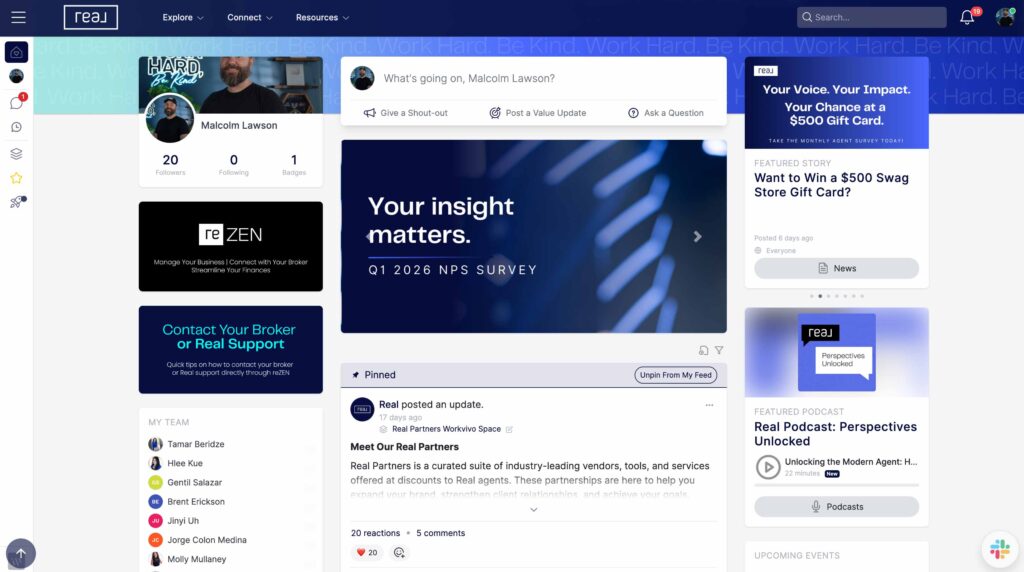
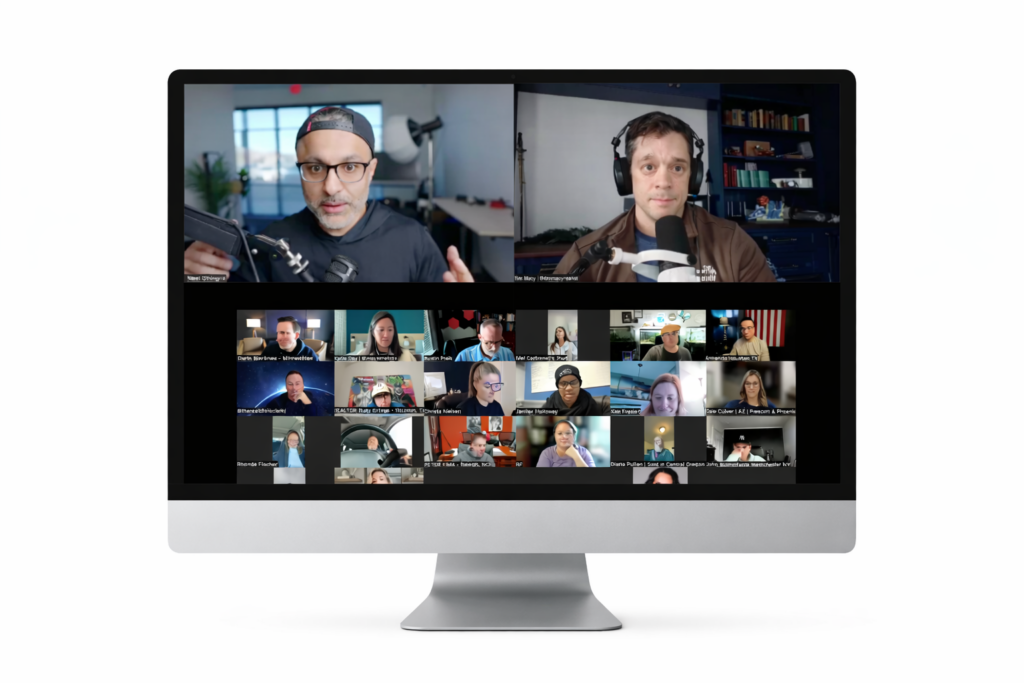
REAL Community Support: The fifth level is REAL’s community itself. If you need help with your listing presentation, or objection handling, or social media content strategy, you can lean on the REAL community to help you grow your business. Workvivo has multiple groups focused on helping agents grow, and REAL has between 25 and 30 live masterminds every single week. This is how you can connect with the REAL community, ask questions, and collaborate.
The “no support” myth usually comes from people who’ve never actually used the system. Once you’re in it, the structure looks a lot different than an empty inbox.
Myth #2: REAL Broker Is Just a Rip-Off of eXp Realty
This one gets repeated a lot, mostly by eXp agents. REAL and eXp are both cloud brokerages, but that’s where the similarities stop. REAL has been around since 2014 and has gone in a very different direction and taken a different approach than eXp in a lot of different ways.
Technology: built in-house vs. bolt-on. eXp relies heavily on third-party tools stitched together. The majority of their software is known as bolt-on technology, meaning they pay for 5 or 6 different pieces of software and try to get them all to work together.
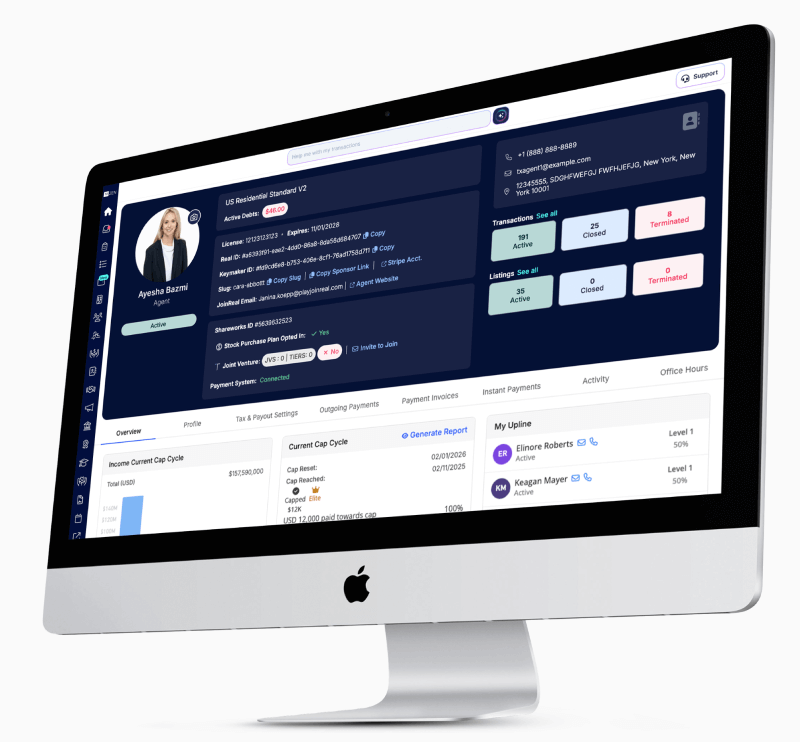
REAL has taken a different approach; instead has over 140 full-time developers building out their software from scratch. At the core of their technology is their reZEN platform, which houses many of the different applications they have built.
The benefit of this strategy is that all of their tools work seamlessly together, and they can customize tools to provide more value, and agents only have 1 platform they need to log into.
Training available to everyone vs. siloed. At eXp Realty, it is common practice for networks to only provide training to agents who are part of their downline. If you are not part of their revenue share downline, then you don’t get access to their training.
At REAL, we wanted to move away from that model completely. That is why all training is available to all agents. There are no silos here, and there are no networks giving exclusive training only to agents in their downline. This has helped build one community of agents, not multiple communities all competing against each other. This has also built a culture of collaboration over competition.
Revenue share structure: 5 tiers vs. 7 tiers. eXp pays out across 7 tiers of revenue share, and they pay the most on the 7th and hardest to unlock tier. They also no longer simply pay agents a % of the commission of agents in your network. Now you instead get a % of the pool of revenue share. eXp also pays up to 50% of its monthly revenue back to agents in revenue share.
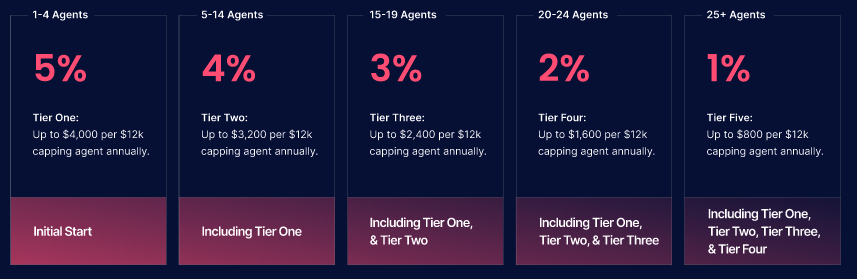
REAL revenue share model is simpler, pays more per agent, and pays the most on the first tier and the least on the last tier. Across the 5 tiers, REAL pays 5%, 4%, 3%, 2%, 1% of the agents’ commission until they cap. For a full capping agent, this is up to $4,000 a year, the most out of any cloud brokerage. REAL also pays 60% of monthly revenue back to agents in revenue share, compared to eXp’s 50%
REAL’s revenue share is fully willible as well, you can leave it as a child if you like. eXp Realty, on the other hand, has an assumable revenue share. Meaning your spouse would have to get their real estate license and join eXp Realty in order for them to assume your spot and receive revenue share.
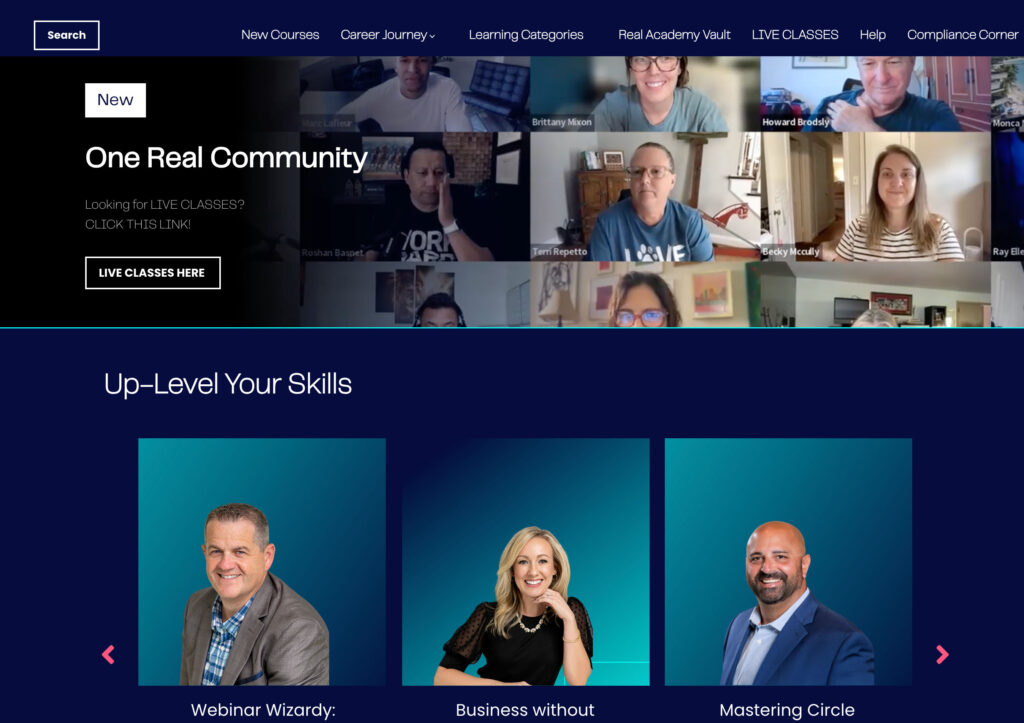
Culture. The culture of the two companies differs a lot. Many agents report eXp Realty’s culture to be heavily focused on revenue share and recruiting. Because of the different silos they have at eXp, there is a culture of competition between agents.
REAL’s leadership has always focused on having a collaborative culture at the company. The culture here is focused on agents’ production far more than recruiting. REAL also has core values like “Work Hard, Be Kind” and “Collaboration over competition” which have a big influence on the culture here.
Myth #3: REAL Broker Is a Discount Brokerage
People hear “lower cost” and assume “lower value.” That’s definitely not the case for REAL.
REAL leverages it’s technology and being cloud-based to cut its overhead expenses and then pass those savings onto agents.
Traditional brokerages, on the other hand, have high overhead expenses — physical office spaces, staff to manage the office, furniture, expensive off-the-shelf software, franchise fees, and more — and they pass those expenses directly to agents through the split, cap, and other fees.
But the real question shouldn’t be “how much does this cost” — but instead “how much value am I getting for what I’m paying?”
By that measure, REAL stands out from the rest. Even though you are probably paying less at REAL, you often get significantly more value than from traditional brokerages. Better, more seamless technology, better and higher quality of training, multiple streams of income into your business, a nationwide community of agents to learn from and collaborate with, ownership in the company with the stock program, and more.
Myth #4: REAL Broker Isn’t Profitable
Is REAL Broker profitable? It’s a fair question for anyone about to build their business on top of a brokerage, and the numbers have moved a lot in REAL’s favor recently.
REAL Brokerage (Nasdaq: REAX) reached EBITDA profitability in 2023, and that trend has continued — EBITDA came in at $62.9 million for full-year 2025, up from $40 million in 2024.
REAL Broker then reached net profitability for the first time in its history during the second quarter of 2025.
Just as important, REAL ended 2025 with no debt and roughly $50 million in cash and short-term investments on the balance sheet.
In short: REAL isn’t a story of a company burning cash with no plan. It’s a company on a clear, improving trajectory toward full profitability, with the balance sheet to back it up.
Myth #5: There Are No In-Person Events at REAL Broker

This could not be further from the truth. In fact, multiple different types of events are put on by them and their agents each year.
RISE: REAL’s flagship annual agent conference, bringing agents together with industry leaders for strategy and training you can put to use immediately.

Velocity events: REAL-hosted, city-by-city production-intensive events featuring industry leaders, built to install the systems that top producers use to scale.
Further Together events: Agent-led events with no sales pitches — just production-focused strategy sharing from agents who’ve been there.
Builder Events: REAL hosts in-person events for its top builders as well as agents wanting to learn how to build a network. These events give agents a chance to network, share best practices, and hear from leadership.
Hundreds of local masterminds: Beyond the flagship events, REAL agents run hundreds of in-person masterminds in local markets across the country year-round.
If anything, agents who join REAL Broker often find there are more ways to connect in person than they expected.
Other REAL Broker FAQ
Q: Is REAL Broker a pyramid scheme?
No. REAL Broker’s revenue share is funded by the company’s own split of commission, not by fees agents pay to recruit others. Agents only generate revenue share once a recruit becomes a “producing agent” by closing deals — recruiting alone doesn’t create income, which is the defining feature of an actual pyramid scheme.
Q: How much does it cost to join REAL Broker?
REAL Broker has a $249 sign-up fee, and agents have an 85/15 commission split until an agent pays REAL Broker $12,000 in company dollars for the year, after which the agent keeps 100% of commissions minus a $900 annual brokerage fee (billed $300 at a time across the first three transactions) and a $50 broker review fee per transaction.
Q: Can I keep my team or brand if I join REAL Broker?
Teams and independent brokerages can generally retain their own branding and identity while operating under REAL’s model, rather than being folded into a single corporate brand. REAL is very flexible with its branding guidelines, as long as the agents are adhering to their state requirements.
Q: Does REAL Broker offer health insurance?
Yes. REAL Broker has partnered with Global Benefits Partners in the U.S. and Sterling Capital Brokers in Canada to give agents access to group-rate medical, dental, vision, disability, and life insurance plans, with savings of up to 35% depending on coverage. You can learn more at realagentbenefits.com
Q: How long does it take to transfer your license to REAL Broker?
Transfer times vary by state, typically ranging from 1 business day to 5. Once REAL receives your completed paperwork. Once your license is transferred to REAL through your state, then you will get a welcome email with an interactive onboarding checklist. Onboarding into REAL can be done in 1 day.